
 Image 1 of 7
 Image 2 of 7
 Image 3 of 7
 Image 4 of 7
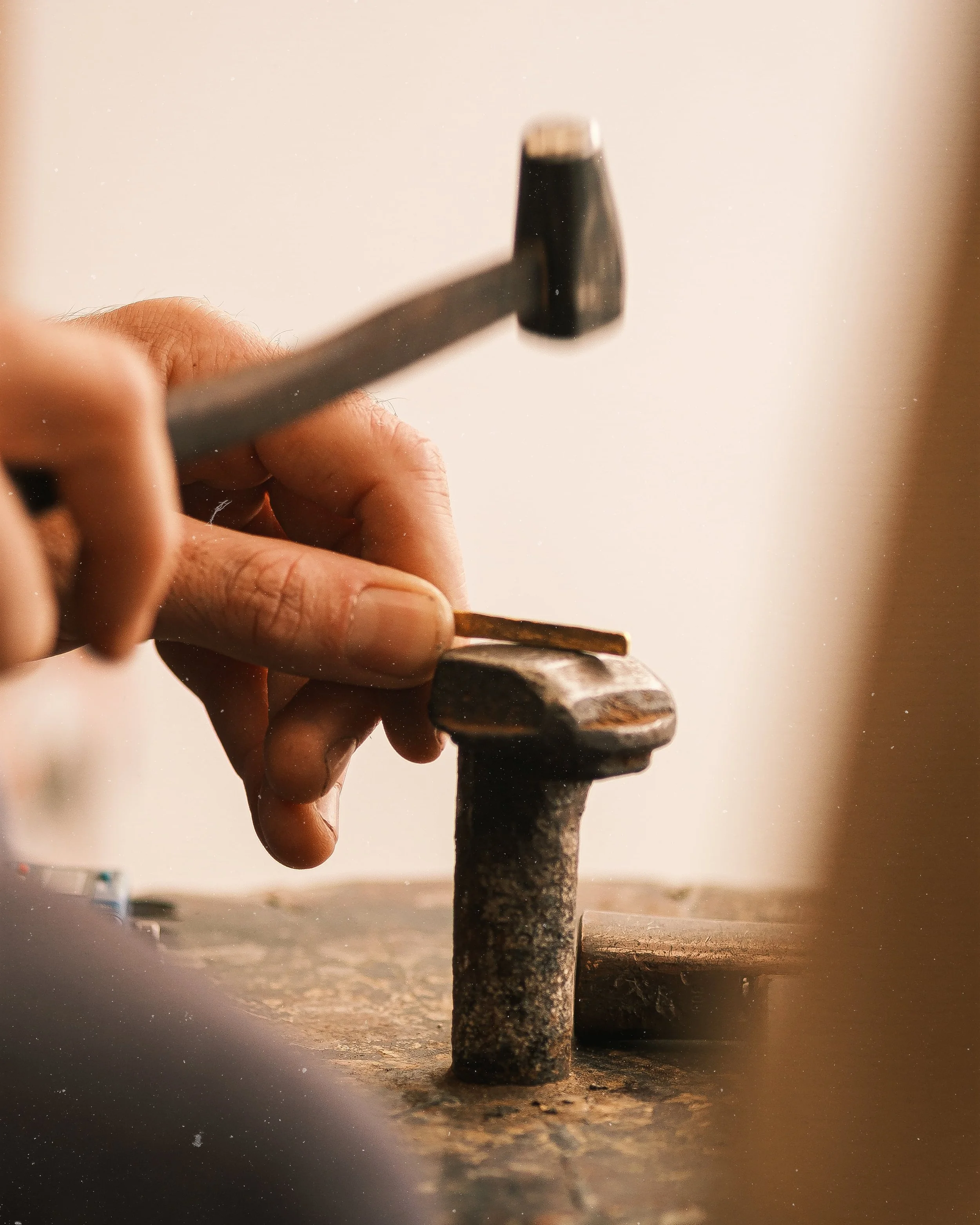 Image 5 of 7
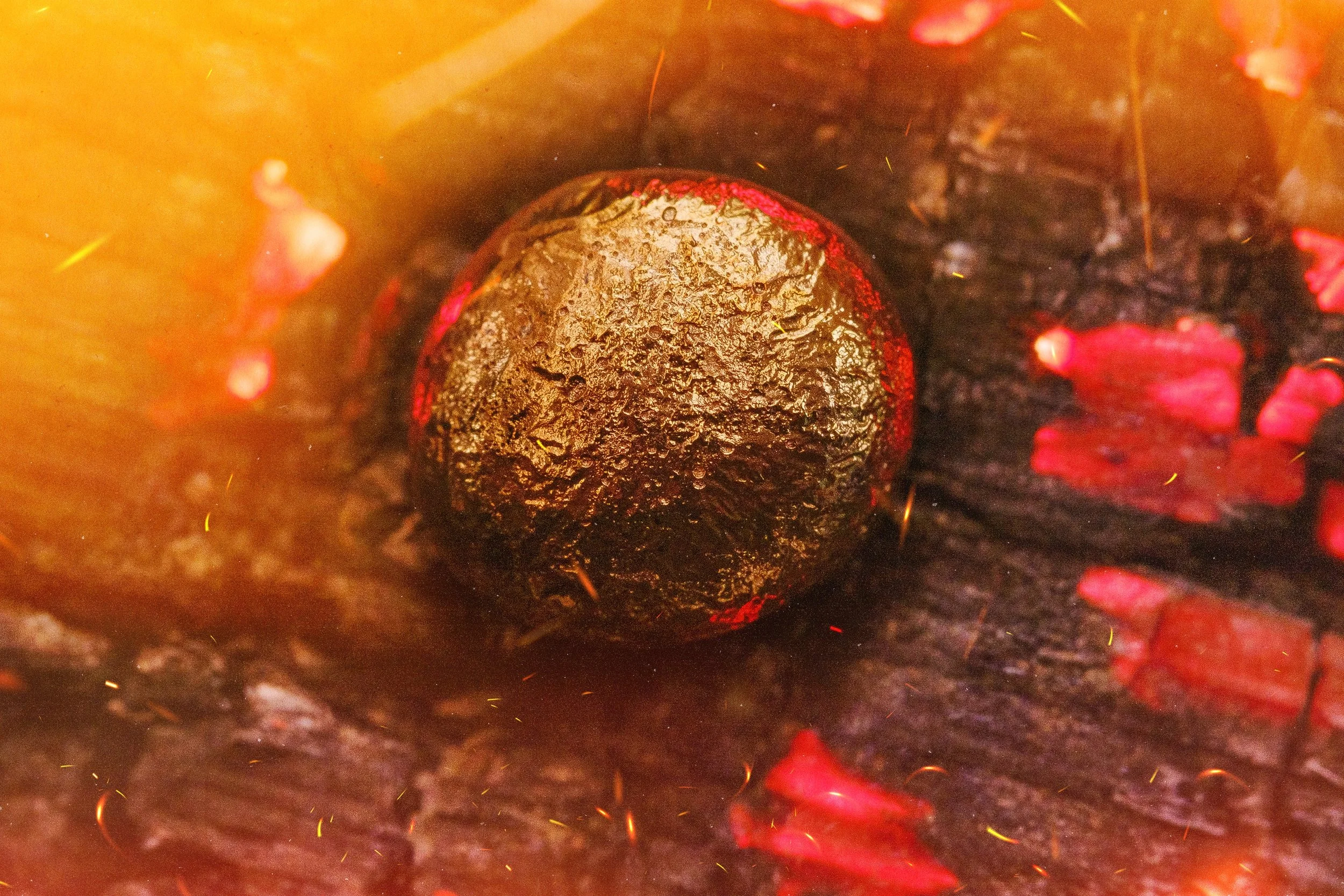 Image 6 of 7
 Image 7 of 7
-
Plato received the account of Atlantis from Solon, who learned it from Egyptian priests at Sais. These priests preserved records dating back 9,000 years before Solon's time. The account describes Orichalcum as second only to gold in value, "flashing with a red light" and covering the walls of temples, particularly the great temple of Poseidon at the center of Atlantis.
The metal adorned sacred architecture throughout the citadel. Temple walls gleamed with it. The very pillars that held Atlantean law inscriptions were wrapped in it. The civilization valued this alloy for beauty and for its energetic properties: the way it held light, the way it resonated with sacred structures, the way it connected the material and divine realms.
When Atlantis fell beneath the waves, the knowledge of true Aurichalcum disappeared. Later civilizations attempted to recreate it, producing brass-like alloys of copper and zinc that bore the name Orichalcum but lacked the sacred proportions. The Romans knew such alloys. The Greeks worked with them. These were practical metals for coinage and decoration, useful but mundane. They carried the name without the wisdom.
The original formula required understanding phi. The secret of its creation encoded into nature itself, there waiting for us to find. The Atlanteans knew sacred geometry. They built their citadel in concentric circles, proportions reflecting cosmic order and precise harmonic ratio. Their metallurgy expressed the same mathematical truths. Gold, silver, and copper arranged according to the golden ratio: the proportion that appears in seashells, galaxies, human anatomy, and the orbits of planets. This ratio generates beauty and stability wherever it manifests.
-
Phi (φ) equals approximately 1.618033988749. This number appears when you divide a line so that the whole length divided by the longer segment equals the longer segment divided by the shorter segment. The proportion spirals through nature: the Nautilus shell, the seed head of a sunflower, the branching of trees, the proportions of the human body from fingertip to elbow to shoulder.
In Aurichalcum, phi governs twice.
First application: The ratio of silver to copper follows phi. For every 1.618 parts silver, there is 1 part copper. This creates the foundational harmony between the two base metals. Silver (lunar, reflective, feminine) and copper (Venusian, conductive, warm) lock into golden proportion, establishing the matrix that will receive gold.
Second application: The ratio of the combined silver-copper alloy to gold also follows phi. Take the total mass of silver plus copper. The relationship between this combined mass and the gold content maintains the golden ratio. This creates a fractal pattern where phi repeats at two scales: within the base metals, and between base metals and gold.
The mathematics work like this: if you have 1000 grams of finished alloy, 382 grams are pure gold (38.2%). The remaining 618 grams consist of silver and copper in phi proportion to each other. Within those 618 grams, silver comprises 382 grams and copper comprises 236 grams. The ratio 382:236 reduces to approximately 1.618:1 (phi). The ratio of gold to the silver-copper combination is 382:618, which also reduces to approximately 1:1.618 (the inverse of phi, which equals phi minus 1).
This double-phi structure creates harmonic resonance at the atomic level. The electrons surrounding gold, silver, and copper atoms interact according to these proportions. The crystalline structure that forms when the alloy solidifies reflects these ratios in three-dimensional space. Sacred geometry becomes physical form.
-
Every modern 9-carat gold alloy contains zinc. Commercial goldsmiths add zinc for practical reasons: it lowers the melting point, improves casting fluidity, and creates the yellow colour you see. Zinc is cheap, abundant, and easy to work with. It serves industrial metallurgy well.
Zinc appears nowhere in ancient alchemical texts describing Orichalcum or Aurichalcum and would appear only as impurity or with different naming conventions. The classical elements recognized by ancient wisdom were gold, silver, copper, tin, lead, iron, and mercury. Zinc (identified as a distinct element only in the 16th century) belonged to no traditional planetary correspondence. It carries no alchemical signature in the Western tradition.
Aurichalcum excludes zinc deliberately. The alloy requires only three metals: gold (solar), silver (lunar), copper (Venusian). These three correspond to the three principles of alchemy: sulfur (solar, active, masculine), mercury (lunar, volatile, feminine), and salt (Venusian, fixed, earthly). Three metals in phi proportion create a complete alchemical system. Adding zinc disrupts the harmonic structure and introduces an element foreign to the original wisdom.
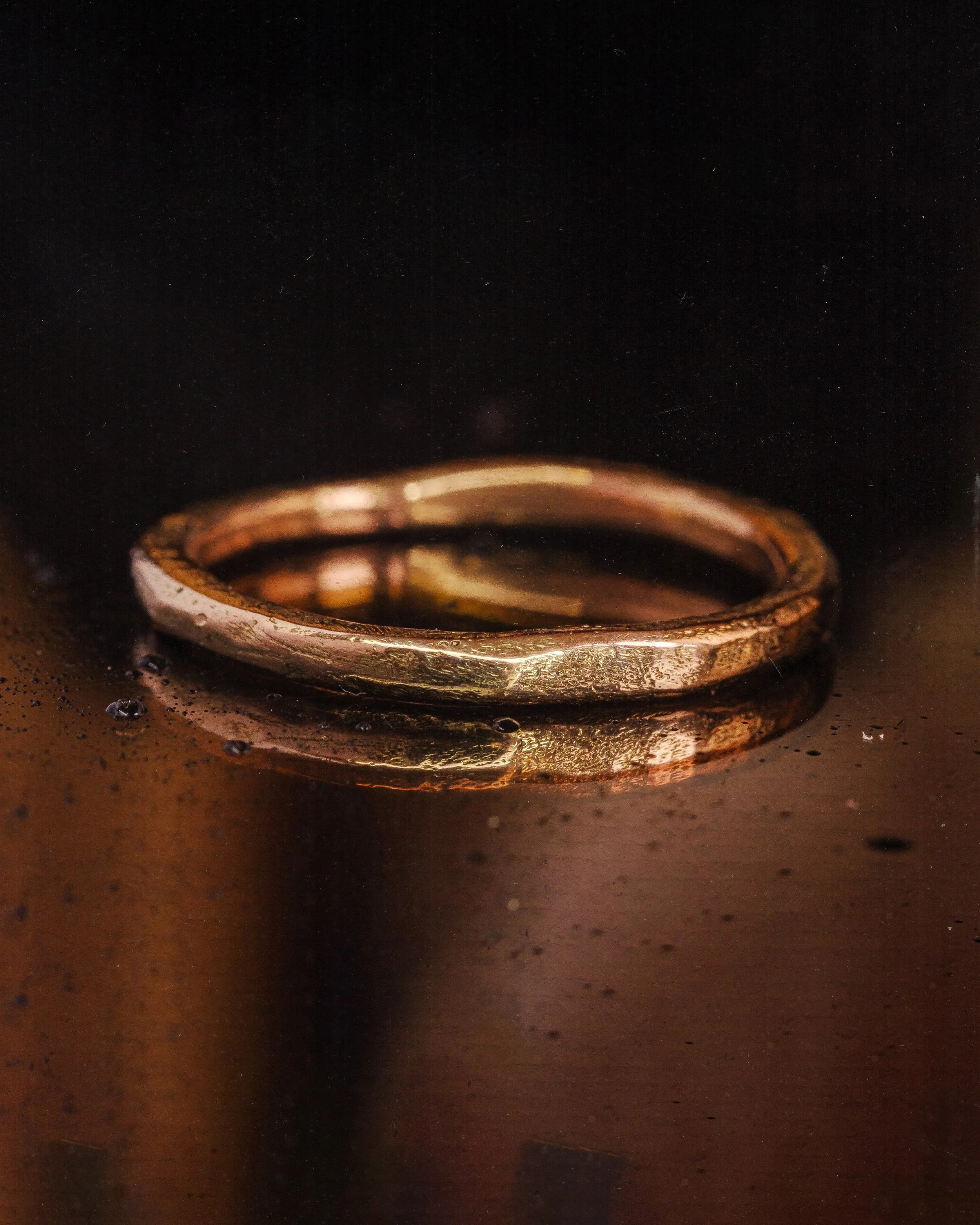
The colour difference is immediate. Standard 9ct yellow gold appears pale and slightly greenish because zinc yellows and whitens the alloy. Aurichalcum glows warm and rich, the red undertones of copper combining with gold's yellow to create the red-golden cast described in Plato's texts. In evening light, when the colour temperature shifts toward amber and red, the alloy flashes with that characteristic Atlantean gleam: fire held in metal.
-
Gold, silver, and copper represent the three classical planetary metals of alchemy.
Gold (☉ Sun): The perfect metal. Incorruptible, eternal, radiant. Gold represents the solar principle, the active force, the spirit that animates matter. In alchemical terms, gold is sulfur: the soul, quite literally the SOL of man (SOLOMON) the burning essence, the divine spark, pure etheric light manifest by density.
Silver (☽ Moon): The receptive metal. Reflective, cool, mysterious. Silver represents the lunar principle, the passive force, the material that receives and reflects light, reflecting the Ether, reflecting the SOL. In alchemical terms, silver is mercury: the mind, the volatile essence, the bridge between spirit and body.
Copper (♀ Venus): The conductive metal. Warm, malleable, beautiful. Copper represents the Venusian principle, the unifying force, the medium through which energies flow. In alchemical terms, copper is salt: the body, the fixed essence, the earthly vessel.
When these three metals are alchemically refined, exalted, and recombined within phi proportion, they create an alchemical quintessence. The solar gold dominates but does not overwhelm (38.2%). The lunar silver and Venusian copper form the larger portion (61.8% combined) but arrange themselves in golden proportion to each other. The result is balance: not equal distribution, but harmonic relationship where each element plays its proper role.
The Atlanteans understood this. Their civilization operated at the intersection of spiritual knowledge and material mastery. They built structures according to cosmic proportion. They arranged society according to sacred principles. Their metallurgy expressed the same wisdom that shaped their temples, their government, their relationship with the divine.
Aurichalcum was temple metal. It belonged to sacred architecture, to priest-kings, to the worship of Poseidon who founded the Atlantean line. The alloy carried blessing through its very composition. The phi proportions aligned it with universal order. Wearing such metal meant carrying sacred geometry on your body, encoding cosmic harmony into your daily existence.
-
No other goldsmith produces this alloy today. Modern 9ct gold contains arbitrary ratios of silver and copper, chosen for cost and convenience, plus zinc for workability. These alloys serve commercial jewellery well enough: affordable, durable, easy to cast in quantity.
Aurichalcum requires different thinking. I craft it specifically as a Talismanic and Amulet alloy, specifically designed to channel and work with life force energy, Ether. It must be tuned like the sacred toroidal instrument it is. The ratios must hit phi precisely. The gold content must exceed 37.5% (the 9ct threshold) while maintaining the proportion. The silver-to-copper ratio must hold 1.618:1. The combined silver-copper to gold ratio must hold phi's inverse. These requirements produce a single solution: 38.2% gold, 38.2% silver, 23.6% copper.