烏金 Karasugane - The colour of a crow’s feathers after rain ~
This ring is crafted from Shakudō, a rare Japanese metal made by fusing high-purity copper with a small amount of gold. Once polished and boiled in a traditional Rokusho copper salt bath, the surface turns a deep, velvet black—described in old texts as the colour of a crow’s feathers after rain. The contrast between the black metal and any gold detail is striking, subtle, and alive. This is why I line the ring in pure 24k gold for contrast and join the ring with a pure gold seam.
Shakudō was once used by master swordsmiths of the Goto family line in samurai-era Japan. The process to make it is extremely difficult. It involves precise alloying and melting conditions, water casting, slow hand forging for grain refinement, and days of precise polishing techniques handed down through centuries, most techniques now lost to memory. I’ve spent years studying and reviving these lost methods to be able to offer this exact finish and feel.
What makes it most remarkable is how the patina breathes. Wear it in the ocean and it fades. Leave it on land, and the black slowly returns, darker and richer each time. Unlike other finishes, it’s not static. It lives. Every ring is slightly different. Every surface tells its own story. And over time, the black deepens as the copper and gold keep reacting to the air. A rare piece, made with care, and built to age beautifully.
烏金 Karasugane - The colour of a crow’s feathers after rain ~
This ring is crafted from Shakudō, a rare Japanese metal made by fusing high-purity copper with a small amount of gold. Once polished and boiled in a traditional Rokusho copper salt bath, the surface turns a deep, velvet black—described in old texts as the colour of a crow’s feathers after rain. The contrast between the black metal and any gold detail is striking, subtle, and alive. This is why I line the ring in pure 24k gold for contrast and join the ring with a pure gold seam.
Shakudō was once used by master swordsmiths of the Goto family line in samurai-era Japan. The process to make it is extremely difficult. It involves precise alloying and melting conditions, water casting, slow hand forging for grain refinement, and days of precise polishing techniques handed down through centuries, most techniques now lost to memory. I’ve spent years studying and reviving these lost methods to be able to offer this exact finish and feel.
What makes it most remarkable is how the patina breathes. Wear it in the ocean and it fades. Leave it on land, and the black slowly returns, darker and richer each time. Unlike other finishes, it’s not static. It lives. Every ring is slightly different. Every surface tells its own story. And over time, the black deepens as the copper and gold keep reacting to the air. A rare piece, made with care, and built to age beautifully.

 Image 1 of 2
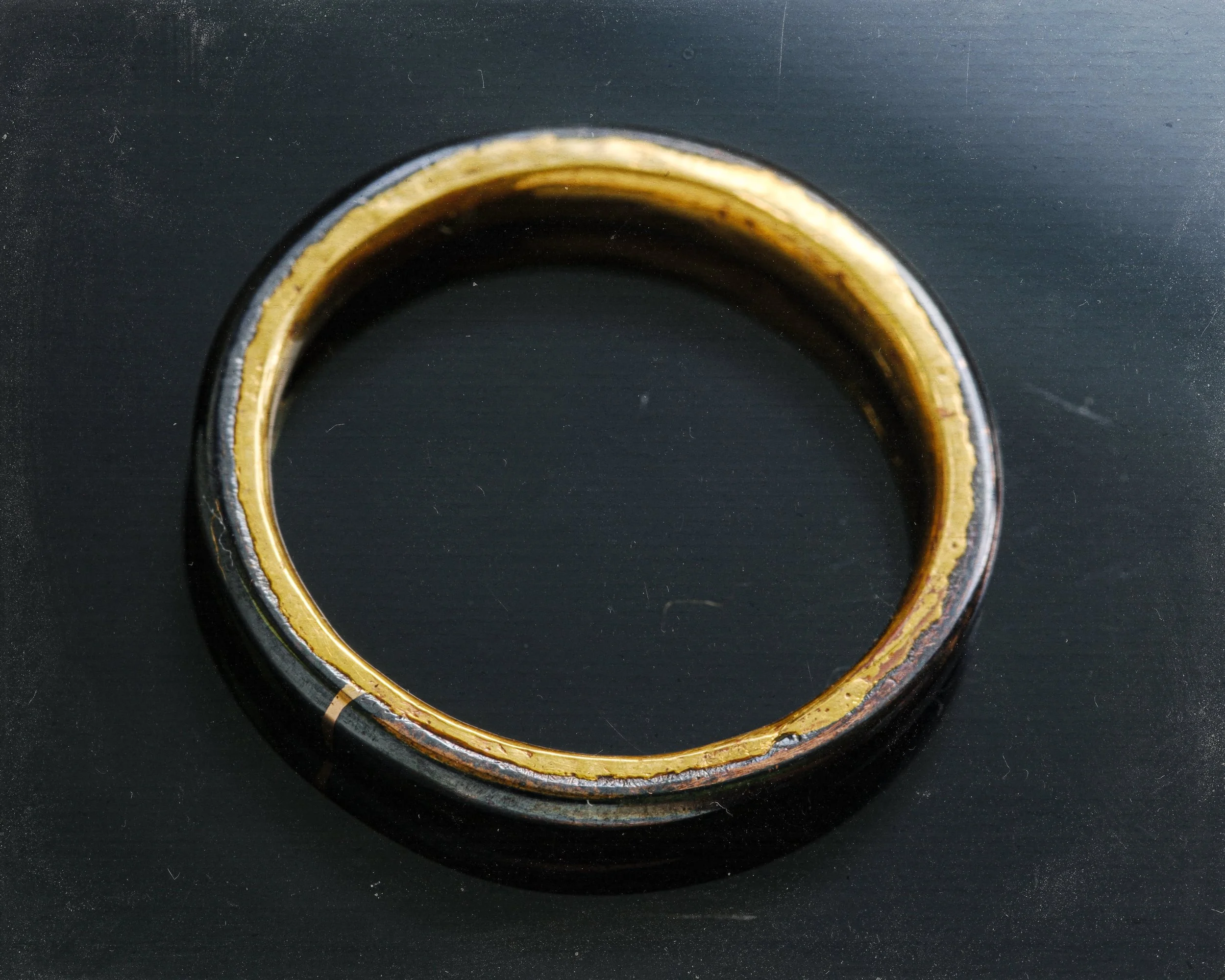 Image 2 of 2

